Sweet Home 3D
Sweet Home 3D is an open-source interior design application for planning rooms and arranging furniture in a house or apartment. It suits homeowners, renters and designers ...

Jmol is an open-source Java-based program for viewing three-dimensional chemical structures. It reads a range of chemical file types and quantum chemistry output, and can animate multi-frame structures and computed normal modes. Support for unit cells, symmetry operations and biomolecule secondary-structure shapes helps with molecular and crystal visualization. Use the desktop application, embed the JmolApplet in web content, or integrate JmolViewer into a Java application.
| Author: | Egon Willighagen |
| License: | Open Source |
| Price: | FREE |
| Released: | Sep 6, 2021 |
| File size: | 58.00 MB |
| Downloads: | 781 |
| Keywords: | 3d molecule viewer, chemistry, chemical structure visualization, Jmol software, quantum chemistry viewer, SourceForge project, chemical, Egon Willighagen, quantum chemistry, molecular animation software, 3D molecular visualization, 3D viewer, jmol molecular viewer, Windows 10 application, x64 compatibility, 3D chemical information, java chemistry software |
| Author URL: | http://jmol.sourceforge.net/ |

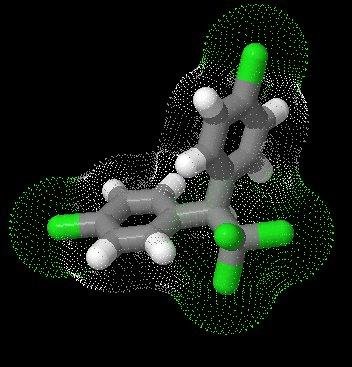



Jmol is an open-source molecular visualization program for students, educators, researchers and developers who need to inspect three-dimensional chemical structures. Its Java-based desktop application displays molecular and other chemical data as interactive 3D models, making it possible to examine structures from different angles rather than relying only on diagrams or static images.
The program reads a variety of chemical file types, including files produced by quantum chemistry software. This lets users view structures and computational results in one environment. Jmol can animate multi-frame files, so changes across a sequence of structures can be examined as motion. It can also animate computed normal modes from quantum programs, helping users visualize molecular vibrations rather than interpreting the data only numerically.
For structural analysis, Jmol supports unit cells and symmetry operations, which are useful when viewing crystal structures and related periodic models. It also draws schematic shapes for secondary structures in biomolecules, giving researchers and learners a clearer view of protein architecture. These options make the viewer useful for exploring both small-molecule chemistry and larger biological structures, with the model providing a spatial context for the information being studied.
Jmol is available in several forms for different workflows. The standalone Java application is intended for desktop use, while the JmolViewer component can be incorporated into other Java applications. The JmolApplet was designed to be embedded in web pages, including online course materials and chemical databases, so structures can be explored as part of a web-based resource. Language support includes multiple translations, and the interface can adopt a supported language from the operating system or be changed by the user.
Jmol is free and open source. Its Java foundation is central to the desktop application and integration options, so a compatible Java environment may be needed to run those forms. The program is suited to examining molecular structures, reviewing quantum chemistry outputs, teaching chemical concepts and building Java-based or web-accessible resources for 3D chemical information.