ActualMap
... to the download page for ActualMap, an exceptional Windows 10 software developed by the renowned VDS Technologies. ActualMap is a powerful mapping tool that seamlessly ...

Visual Leak Detector is a freeware memory debugging library for Visual C++ developers. Integrated into an application during testing, it reports leaked memory blocks with stack traces and source locations when available. It can detect COM-based and Win32 heap leaks, dump block contents in hex and ASCII, exclude selected modules, and send configurable reports to a file or debugger.
| Author: | Dan Moulding |
| License: | Freeware |
| Price: | FREE |
| Released: | Oct 17, 2017 |
| File size: | 2.82 MB |
| Downloads: | 361 |
| Keywords: | memory leak debugging library, Detector, visual c++ memory leak tool, win32 heap leak detection, scan, Dan Moulding, Visual Leak Detector, Windows 10 software, Visual library, debugging tool, visual leak detector, Detect, Leak Detector, com memory leak detector, memory leak report tool, x64 architecture, memory leak detection |
| Author URL: | http://vld.codeplex.com/ |
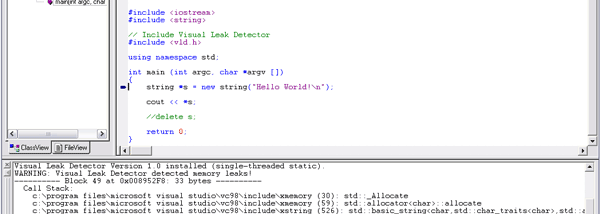

Visual Leak Detector is a memory debugging library for developers working with Visual C++. It helps identify memory that an application allocates but does not release, providing evidence developers can use to trace leaks during testing and debugging. Rather than acting as a standalone scanner, it integrates with a Visual C++ project and reports leaks from the running process when the application exits.
For each detected leaked block, the tool can produce a stack trace, including source-file and line-number details when available. This gives developers a route from a leak report back to the code that allocated the memory, making it easier to locate the source than relying on a count of unfreed allocations alone. It detects a broad range of in-process leaks, including COM-related allocations and memory allocated through the Win32 heap.
Reports can include a hexadecimal and ASCII dump of each leaked block, which helps when examining the contents of memory left behind. Developers can adjust the report's level of detail and choose to save it to a file or send it to the debugger. Selected modules can also be excluded from leak checking; this is useful when a DLL or the main executable should not contribute to the results being investigated.
Visual Leak Detector is intended for development and test workflows, not for monitoring memory use in finished applications. A developer can run a program under the library, inspect the resulting leak report, and use the stack and data details to guide a fix before repeating the test. Its coverage of COM and Win32 heap allocations can help with projects that use more than the allocation patterns covered by basic Visual C++ leak checks.
The library is freeware and was created as an alternative to the limited leak detection built into Visual C++. It is designed for Visual C++ developers on Windows; compatibility information includes Windows 10, alongside older Windows releases. Results depend on the application being run with the detector integrated, and source locations appear when available. It is a focused tool for finding in-process memory leaks, rather than a general-purpose performance profiler.