Portable RubyInstaller for Windows 10 - Full description
Portable RubyInstaller provides a Ruby development environment that can be run from a folder on a Windows PC or from portable storage such as a USB drive. It is intended for Ruby developers who need an environment they can move between machines, keep separate from a conventional system installation, or use for testing and coding without a traditional setup process. The files are extracted to a chosen location, from which Ruby can be started and used for development work.
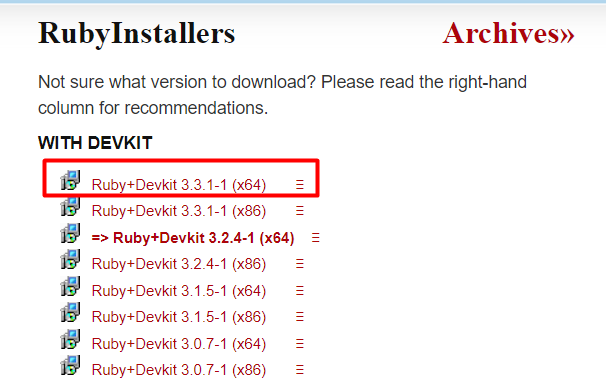
The included Ruby environment supports writing and running Ruby scripts and applications. Developers can use it to try code, test project changes, and work on Ruby-based tools without configuring a permanent installation on each computer. Portable RubyInstaller supports multiple Ruby versions, which is useful when a project depends on a particular version or when comparing behavior across versions. Separate environments can help keep project requirements distinct and reduce the need to change a machine's main Ruby setup.
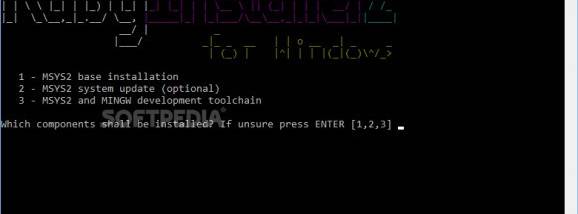
The package also includes MSYS2, providing a Unix-like shell and a package management system for obtaining development tools and libraries. This gives developers access to command-line workflows alongside Ruby, which can be useful when preparing dependencies or working with software components that require additional tools. Because the environment is stored in an accessible folder, its files can be managed directly and carried with the project workflow, rather than relying on a conventional system-wide installation.
Portable RubyInstaller can suit developers who work on more than one Windows computer, maintain older Ruby projects, experiment with newer language features, or want a self-contained environment for learning and testing. It can also be useful in shared or temporary work settings where keeping development files together is more practical than repeating installation and configuration steps. Portability does not remove the need to check that a project's dependencies and tools are available in the environment being used.
The software is open source and is intended for Windows. Supported systems include Windows 10 and Windows 11, as well as Windows Server 2016, 2019, 2022, and 2025. Its portable approach centers on extracting the package to a selected location and running Ruby from there; it is not a replacement for checking project-specific requirements or configuring any additional tools a project needs.