Portable Process Hacker
Portable Process Hacker is a Windows system-monitoring and administration utility for ... control than the standard Task Manager provides. Its process tree presents running applications and background processes in ...

Process Hacker is an open-source Windows utility for inspecting and controlling running processes and services. Its customizable process tree, performance graphs, network-connection list, and detailed views of threads, modules, memory, handles, and security tokens help with troubleshooting and system administration. It also supports service controls, regular-expression filtering, memory string scanning, and advanced process operations.
| Author: | wj32 |
| License: | Open Source |
| Price: | FREE |
| Released: | Mar 29, 2016 |
| File size: | 2.20 MB |
| Downloads: | 857 |
| Keywords: | process manager, Windows 10, task manager alternative, x64 software, Viewer, open-source tool, system performance monitor, service manager, ProcessHacker, Task manager, wj32, process explorer, Process Manager, Manager, Process Hacker, system utilities, Manage, Process Manipulator, process monitor |
| Author URL: | https://processhacker.sourceforge.io/ |

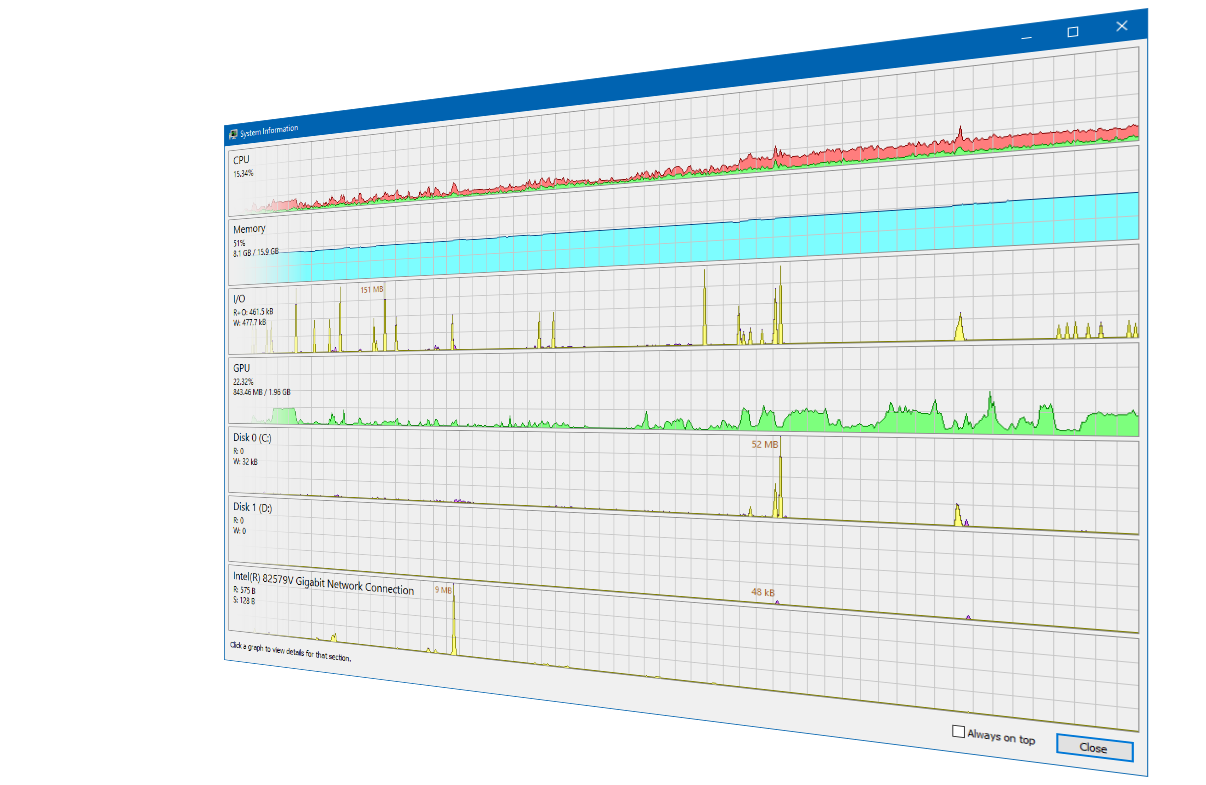
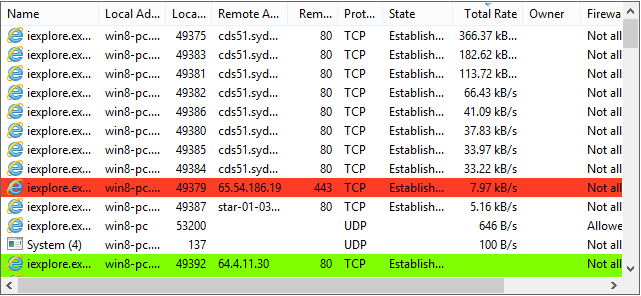
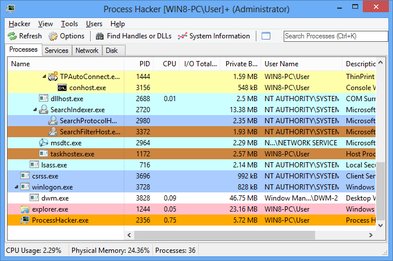

Process Hacker is an open-source process and system-monitoring utility for Windows, aimed at users who need more detail and control than the standard Task Manager provides. Its customizable tree view organizes running processes by their relationships, while highlighting helps distinguish activity at a glance. It is useful for inspecting system behavior, tracking resource use, and managing processes and services from one interface.
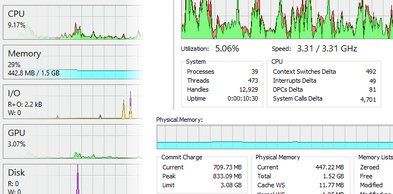
The process view combines live status with detailed information for each item. Performance graphs show activity over time, and a process history helps reveal changing resource use. Users can inspect threads and their call stacks, loaded modules and mapped files, virtual memory, environment variables, handles, and security-token details. Filtering can use regular expressions, and string scanning can search process memory for text. The interface can also show what a thread is waiting on, and identifies items such as relocated or .NET DLLs.
Process Hacker includes a dedicated service list with controls to start, stop, pause, resume, or delete services. A network-connection view helps identify which processes have active connections. Its process controls include suspending, resuming, and terminating processes or threads, while token tools expose permissions and allow privileges to be enabled or disabled. It can also connect to other sessions and display symbolic access rights and information about POSIX processes. DLLs can be injected into a selected process or unloaded from its module list, actions intended for users who understand the effects of modifying a running program.
These tools suit troubleshooting, software development, and system administration, especially when a process behaves unexpectedly or a service needs closer inspection. The detailed views can help investigate resource consumption, threads, loaded components, connections, and permissions without relying on several separate utilities. Advanced process manipulation can affect system stability or security, so actions such as terminating protected processes or changing loaded modules require care. Process Hacker also includes a kernel-mode driver for lower-level process operations.
The program is open source and is intended for Windows systems. Its interface centers on process, service, performance, and connection information, with controls available through context menus and detail panes. It is a specialist utility rather than a general-purpose cleanup tool; users who only need to close applications may find the built-in Task Manager sufficient, while users diagnosing complex process behavior can draw on its deeper inspection features.