RWIND for Windows 10 - Full description
RWIND is a computational fluid dynamics program for engineers and other professionals who need to study how wind moves around buildings, bridges, and other structures. It creates a virtual wind tunnel in which a 3D model can be placed and analyzed, helping users examine airflow and the resulting pressure and surface wind loads before or alongside physical testing.
A simulation begins with a 3D structure model and the wind conditions to be evaluated. RWIND lets users configure the model and flow parameters, then calculate airflow around the structure. Results can be viewed in dedicated model, zone, mesh, and simulation views, making it possible to inspect the geometry, analysis regions, computational mesh, and calculated flow from different perspectives. These views help users connect the setup of a model with the results produced by the simulation.
The program provides controls for factors that affect wind behavior, including terrain, surface roughness, materials, and wind vectors. A layer manager organizes the elements in a project and allows detailed adjustments to individual components. Models can be scaled to investigate structures of different sizes, while neighboring structures can be included to assess how their presence changes wind loads. Openings and internal pressure can also be considered when airflow passes through a building or its sub-elements.
These capabilities support investigations of wind exposure on complex structures, comparisons of alternative building configurations, and analysis of how nearby buildings or terrain influence airflow. Engineers can use the virtual tunnel to explore load patterns and flow behavior under selected conditions, including cases where openings may channel air through a structure. The results can inform design review and safety assessment, but they depend on the accuracy of the input model and chosen parameters.
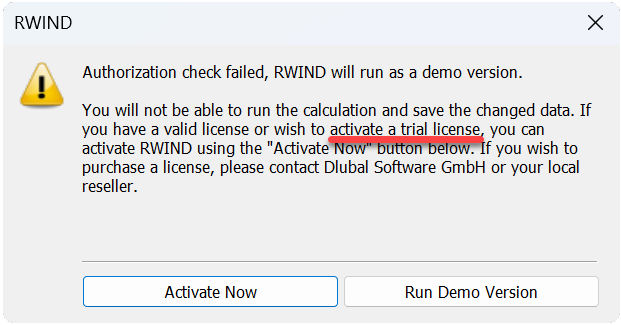
RWIND is commercial engineering software from Dlubal Software, offered here as a demo. It is intended for 64-bit Windows 10 and Windows 11 systems. Its specialist modeling and simulation workflow is best suited to users familiar with structural engineering or computational fluid dynamics; it is not a general-purpose 3D modeling or casual weather application.