LuxRender
LuxRender is a physically based, unbiased rendering engine for producing images from 3D scenes. It is intended for artists, designers and visualization professionals who need ...

LuxRender is a physically based, unbiased rendering engine for turning 3D scenes into realistic images. It simulates the flow of light using physical equations, which can produce natural-looking illumination, reflections and shadows. As rendering continues, added samples refine the result, allowing users to trade render time for reduced noise. The freeware engine is designed for 64-bit Windows.
| Author: | LuxRender Team |
| License: | Freeware |
| Price: | FREE |
| Released: | Jun 14, 2016 |
| File size: | 36.00 MB |
| Downloads: | 337 |
| Keywords: | x64 rendering, 3d light simulation, physically based renderer, LuxRender Team, free rendering software, x64 render, 3D rendering software, realistic 3d rendering, x64 flow of light simulation, LuxRender x64, x64 rendering engine, x64 engine, luxrender download, open-source program, x64 simulate flow of light, Windows 10 compatible, photorealistic images, unbiased rendering engine |
| Author URL: | https://www.luxrender.net/ |
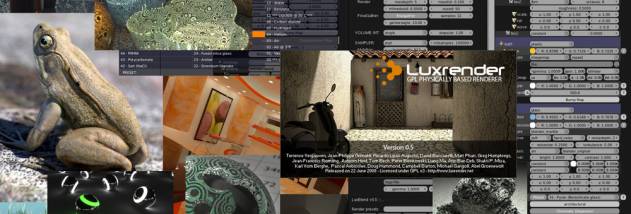

LuxRender is a physically based rendering engine for creating realistic images from 3D scenes. It is intended for artists, designers and other users who want lighting and materials to behave according to the physics of light rather than relying only on fast, approximate shading. The engine is unbiased, meaning its rendering approach aims to converge toward an accurate result as it processes more samples, rather than introducing a fixed bias to reach an image quickly.
The renderer simulates how light travels through a scene using physical equations. Light can interact with surfaces and materials to form the visible image, making the quality of illumination and material settings central to the result. This approach is useful for scenes where natural-looking lighting, reflections or soft shadows matter. As rendering proceeds, additional samples refine the image, so users can balance render time against the level of visible noise and detail they need.
LuxRender functions as the rendering component of a 3D production workflow: a scene must be prepared in a compatible format or application before the engine can render it. Scene geometry, lights, camera placement and material properties determine the final output. It is therefore suited to producing still images from designed or modeled scenes, rather than serving as a general-purpose image editor or modeling tool. The physically based method can be particularly valuable when a scene needs a consistent lighting result across different materials and objects.
Typical uses include product visualization, architectural imagery, and other 3D work where photographic-looking results are more important than immediate previews. Because unbiased rendering can require substantial computation, complex scenes or highly refined images may take longer to render. Users can begin with lower-quality previews and allow more sampling for a cleaner final image, depending on their workflow and available hardware.
LuxRender is freeware and is offered here as a 64-bit Windows application. The provided operating-system information includes Windows 10 x64; it does not establish support for Windows 11. As a rendering engine, it is most useful alongside the tools that create or export its input scenes. Users should check that their 3D application and scene workflow can supply compatible input before relying on it for a project.