Network Traffic Generator and Monitor
Network Traffic Generator and Monitor is a Windows utility for testing network equipment and services under controlled traffic loads. Network administrators, system testers and developers can ...

Ostinato is a packet generator for network engineers and developers who need to test devices and software with controlled traffic. Build multiple streams in the GUI or automate them through a Python API, then configure protocol fields, rates, bursts and packet counts. Interface and per-stream statistics help measure traffic rates and packet loss. It can also edit and replay PCAP files.
| Author: | Srivats P. |
| License: | Commercial |
| Price: | $19.00 |
| Released: | Jun 19, 2020 |
| File size: | 6.40 MB |
| Downloads: | 993 |
| Keywords: | traffic generator, network traffic generator, packet loss testing, traffic analyzer, Ostinato software, packet crafting tool, x64 architecture, pcap replay tool, python network testing, packet generator, Traffic, Analyzer, Srivats P. developer, network load testing, Generator, Windows 10 compatible |
| Author URL: | https://ostinato.org/ |

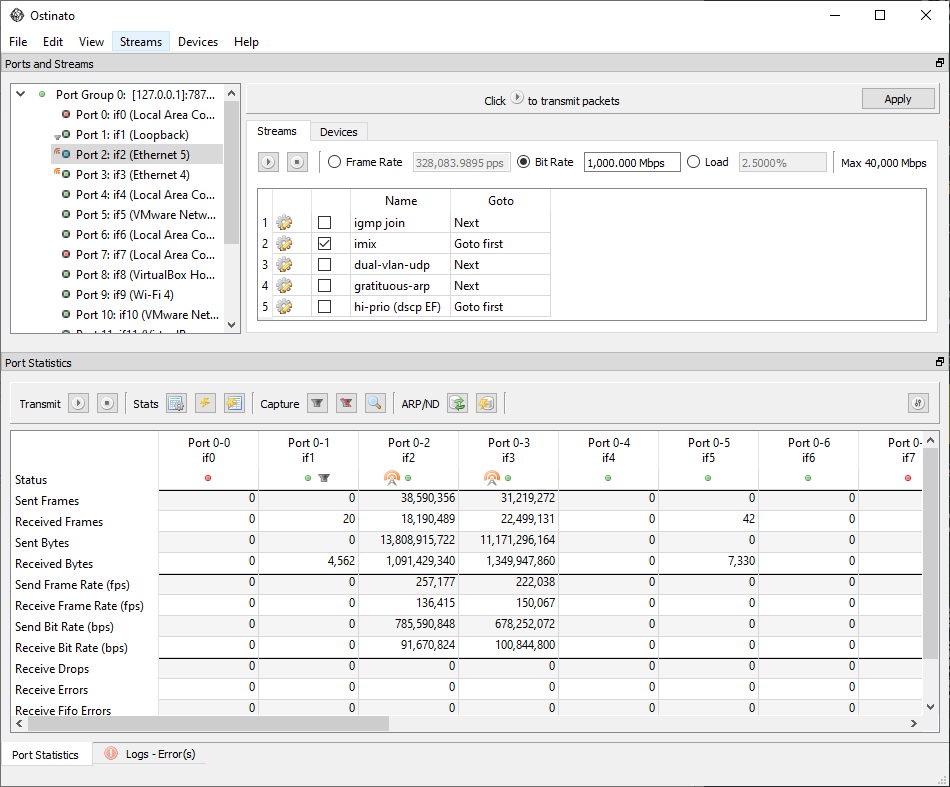
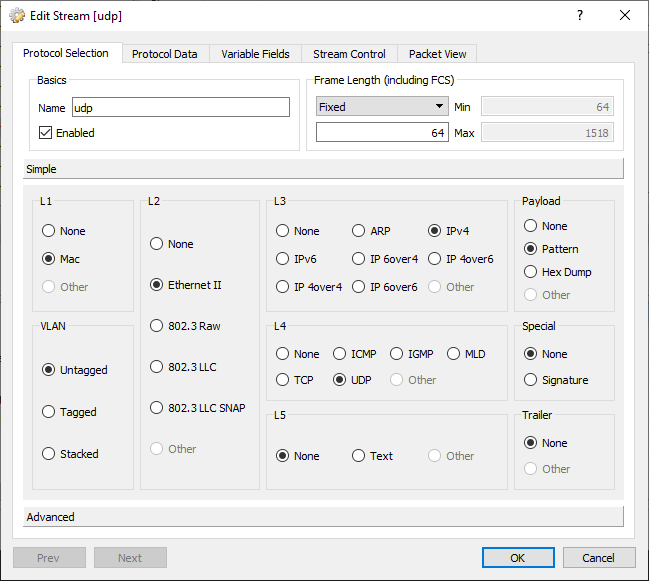
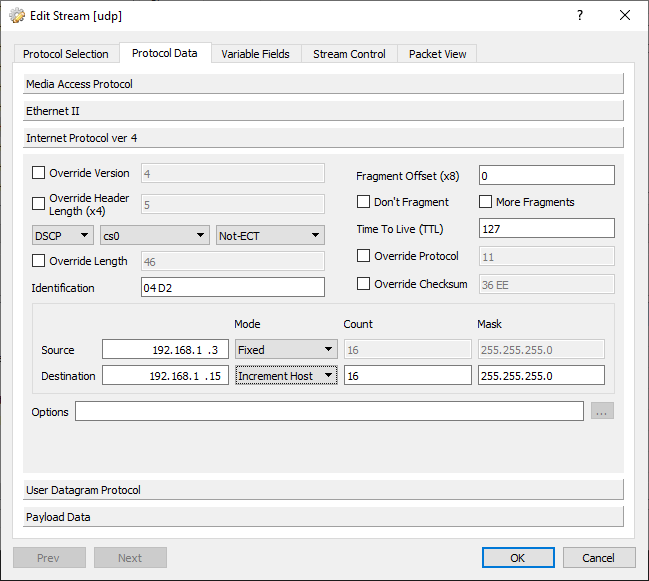
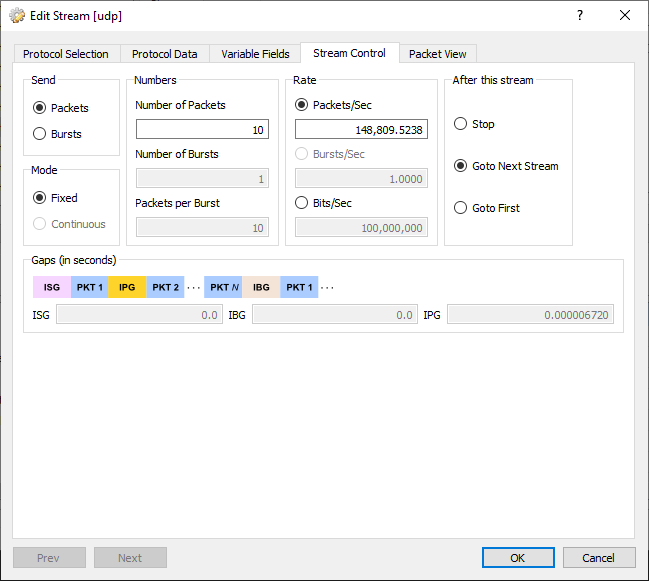
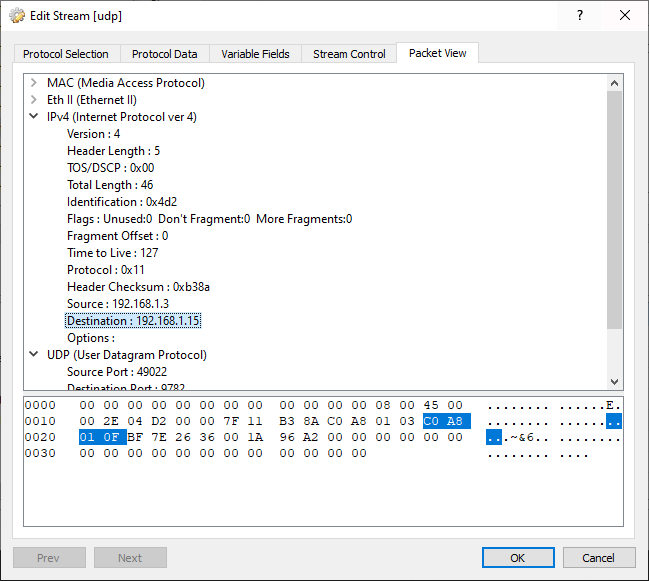

Ostinato is a packet generator and network traffic testing tool for network engineers, developers and administrators who need to examine how devices and software handle controlled traffic. Its graphical interface provides a way to build packet streams without scripting, while a Python API supports automated tests and repeatable network experiments. It is designed for load and functional testing, rather than for generating traffic to websites or simulating stateful TCP connections.
A test can contain multiple streams, each configured with its own protocol layers, packet count, transmission rate and burst behavior. Users can set individual protocol field values, vary fields such as IP or MAC addresses across packets, or arrange protocol layers in unusual orders to check how equipment handles malformed or unexpected traffic. A hex dump can supply some or all packet bytes when a test requires precise control. The available protocol set covers common Ethernet, VLAN, ARP, IPv4 and IPv6 traffic, along with TCP, UDP, ICMP, IGMP and MLD. Text-based payloads for protocols such as HTTP, SIP and RTSP can also be used, though their underlying transport remains stateless.
Ostinato reports transmit and receive rates and interface-level statistics during testing. Per-stream measurements provide more granular packet-loss results, helping users compare expected and observed delivery. ARP and ICMP emulation can represent multiple IP hosts for traffic simulations. The program can also capture network traffic; Wireshark is needed to view captured packets. PCAP files can be opened, edited, replayed and saved, which lets a test build on existing captures rather than starting from scratch. An experimental scripting option allows a user-provided script to substitute for an unimplemented protocol.
The interface is suited to hands-on troubleshooting and controlled device testing, while the Python API can integrate packet generation into automated validation workflows. Ostinato uses a controller-and-agent model: one controller can manage multiple agents, and multiple controllers can share an agent. On Windows, exclusive control of a port helps prevent the operating system from sending stray packets during a test. This can make results more controlled, especially when measuring packet loss or testing how network equipment responds to a defined stream.
Ostinato is commercial software and is available for Windows, Linux and macOS, as well as in Live CD/USB and virtual appliance forms. Its packet generation is stateless, so it does not establish stateful, connection-oriented TCP sessions; tests requiring that behavior need a different tool. Windows users can use the GUI or Python API, depending on whether they are configuring an individual test or automating a broader test process.